The Letter Your Children Will Wish You Had Written
The most valuable thing in your estate is not a legal document. It is a letter only you can write — and the people who will need it most are the ones who will never get to ask you for it.
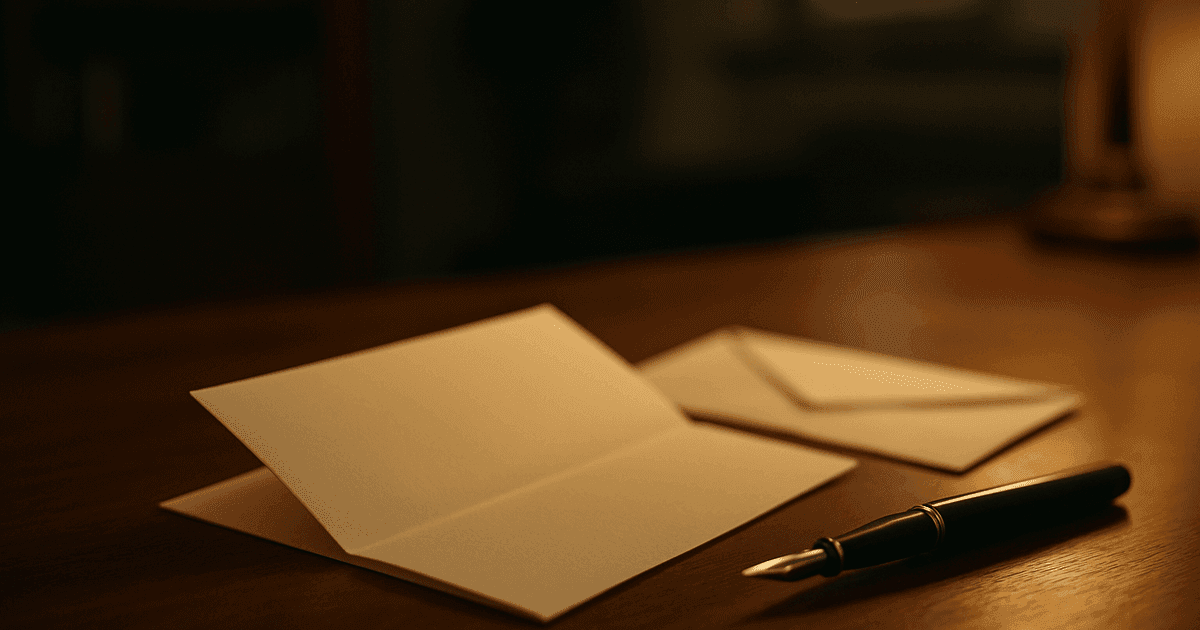
There is a document your children will look for that no attorney will ever draft, no form will ever capture, and no court will ever require. It is a letter from you, in your own words, written while you were alive — and its absence is one of the quietest, most common regrets a grieving family carries.
We spend enormous energy on the legal instruments: the will, the trust, the power of attorney. They matter. But they answer only one set of questions — who gets what, and who decides. They are silent on nearly everything your family will actually ache to know. This post is about the letter that fills that silence, and why it is worth writing this week.
What the legal documents leave out
A will tells your children that the house goes to the three of them in equal shares. It does not tell them whether you hoped they would keep it or sell it. It does not tell them where the deed is, which neighbor has a spare key, or that the furnace was serviced last spring. It does not tell them that the watch in the top drawer was your father's, and that you always meant for the oldest to have it.
The legal record is a skeleton. The letter is the part that makes it human — and it is the part your family will read more than once.
What goes in the letter
There is no correct format. It can be one page or ten. But the letters that help families most tend to cover four kinds of things:
- Where things are. The accounts, the documents, the safe and its combination, the attorney's name, the policies. The practical map your family needs in the first week.
- What you want — not legally, but personally. Your wishes for the service, the things that carry meaning, what you hope happens to the home, the heirlooms, the pets.
- What you know that no one else does. The recurring payment that will bounce, the loan to a friend, the storage unit, the one password that unlocks everything else.
- What you want them to hear. The part that is not logistics at all — what you were proud of, what you forgave, what you hoped for them. The sentences they will reread for the rest of their lives.
The first three are about preventing the second loss — the long administrative crisis that follows a death when nothing was written down. The fourth is about something money cannot touch.
Why people do not write it
Almost everyone agrees the letter is a good idea. Very few people write it. The reasons are familiar. It means sitting with your own mortality long enough to put it on paper. It feels morbid to address your children as though you are already gone. And it feels enormous — as if you have to say everything, perfectly, in one sitting.
You do not. The letter is not a final statement. It is a living note you can revise every year, on a birthday or a holiday, for the rest of your life. The first version can be three sentences. The only version that fails is the one you keep meaning to write.
Your will tells your family what you owned. Your letter tells them who you were, and what to do on the morning they have to manage without you.
A letter no one can find is not a letter
Here is the part that undoes most good intentions. People who do write the letter often hide it too well. It goes in a drawer no one thinks to open, a safe no one has the combination to, or an email account no one can log into. A letter your children cannot find is, functionally, a letter you never wrote.
This is the same problem that defeats wills and policies: a document only works if the right person can reach it at the right moment. The letter has to satisfy the same conditions as everything else — someone knows it exists, knows where it is, and can actually get to it when the time comes.
How to write it this week
Do not block off an afternoon for it. Open a blank page tonight and write the first version in ten minutes. Start with the only sentence that really matters — something like, "If you are reading this, here is what I want you to know" — and then write whatever comes. Where the important papers are. One practical thing they will need. One thing you want them to hear.
Then put it somewhere they will actually find it. Upload it to a vault alongside your core documents, name the person who should receive it, and let the handoff be handled for you. You can come back and make it longer, and better, as many times as you like.
The letter is the most personal thing you will leave behind, and the easiest of all of it to start. Ten minutes tonight is enough to make sure the most important words you have are not lost in a drawer.
Create your free vault at keepacy.com.
Start your free vault
Centralize your most important documents and decide who gets access — only when it matters.
Create your free vault